

Thrive with your DSP Gene
Whether your result is new or you’ve lived with it for years, connect with others who share your gene and stay close to the latest research and clinical trials that could help you live a healthier life.
Join the DSP communityHave a different gene? Search here.

“When my result came back, I felt completely alone. Finding people who truly understood changed everything.”
Maria, 47
Living with the MYH7 cardiomyopathy gene

“My diagnosis explained my family history, and let me take action to protect my kids.”
Christy Johnson
Living with a DSP cardiomyopathy gene

“The community answered questions I didn’t even know how to ask. I finally feel in control.”
James, 34
Caregiver to father with TTN cardiomyopathy gene
Your DSP quick-start guide
You don’t need to figure everything out today. Here’s what matters now, and what can wait a few weeks.
What you can do today
Join the DSP email list. New DSP trials and findings are emerging quickly. Fill out the form below to receive updates about future research and clinical trial opportunities.
Connect With Others: You don’t have to process this alone. Join the DSP Cardiomyopathy Facebook community to ask questions, share experiences, and hear from others on the same path.
Learn Through Video: Check out our recorded webinars with real patients, real doctors, and plain language
Talk With Someone Who’s Been There. Not sure where to start? Email us with your questions at info@geneticcardiomyopathy.org
Learn More:
Explore these trusted organizations for additional information and support:
- DCM Foundation: Learn more about dilated cardiomyopathy, inherited heart disease, patient education, and support resources.
- Foundation for Inherited Arrhythmias: Learn more about heart rhythm disorders, inherited arrhythmias, family screening, and patient support.
- HeartCharged: Learn more about inherited heart conditions through patient stories, education, advocacy, and support.
Building your care plan
Find a Specialist. Not all cardiologists specialize in cardiomyopathy or inherited heart conditions. In the coming weeks, connecting with a Cardiomyopathy Specialist can make a meaningful difference in how your care is guided.
Establish a Baseline. Your care team may recommend heart testing, such as an echocardiogram or EKG, to understand your current heart function and create a reference point for the future.
Consider Genetic Counseling. A genetic counselor can help you better understand your genetic testing result, what it means for your health, and how to approach conversations with family members who may want to be tested.
Support Your Heart Health. Your care team will work with you to focus on protective measures like blood pressure management. Small, consistent steps will give your heart the best opportunity to stay strong.
Take these resources with you:
Download and print the Doctor Discussion Guide to help you feel organized and confident as you navigate your diagnosis.
Understanding DSP Cardiomyopathy
The Heart’s “Structural Glue”
The DSP gene helps create desmoplakin, a protein that acts like internal glue for your heart. It keeps muscle cells held firmly together during the constant stress of every heartbeat.
When DSP isn’t working properly:
As those cell-to-cell connections weaken, the heart muscle can become vulnerable to:
- Inflammation and scarring (fibrosis).
- Irregular heart rhythms (arrhythmias).
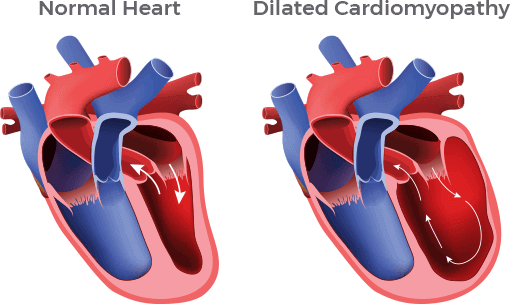
- Muscle weakening, leading to conditions like ACM, ARVC, LVNC, or DCM.
What this means for your care
Because DSP variants can cause heart rhythm issues even before the muscle weakens, regular monitoring and specialized care, including the potential for a protective ICD, are essential.
Beyond the Heart
Since desmoplakin is also found in other tissues, some people with the DSP variant may notice physical traits like:
- Unusually curly or sparse hair.
- Thickened skin on the palms or soles of the feet.
You did not cause this. Genetic variations are a natural part of human biology. Knowing this information now gives you and your care team a powerful tool to protect your heart health and guide your long‑term care.
Why Specialized Care Matters
Because DSP variants are unique, your care should be too. While a general cardiologist is a great starting point, managing DSP cardiomyopathy usually requires a cardiomyopathy genetics specialist with experience caring for patients with inherited heart conditions and cardiac conduction disorders.
To find a cardiomyopathy specialist, please click here.

“In a community matched to your exact diagnosis, families get support that helps them thrive.”
Sharisse Jiminez
Genetic Counselor
“Connecting with families who share your diagnosis can provide support, understanding, and sense of community.”
Sharisse Jimenez-Cyrus
Genetic Counselor
Watch a 2-minute message from our Executive Director, Greg Ruf
Connection & Support for DSP Cardiomyopathy Patients
You are part of a supportive community.
“Finding the DSP result felt like finally getting the owner’s manual for my heart.”
If you would like to connect with others, you can join our private DSP Cardiomyopathy Facebook community to ask questions, share experiences, and hear from others walking a similar path.
Watch & Learn about DSP Cardiomyopathy
Real patients, real doctors, real stories. Watch when you’re ready.
DSP Patient Welcome by the Dilated Cardiomyopathy Foundation | 2 min.
DSP Research Updates April 2025 | 68 min.
DSP Clinical Trials & Research
Progress in this field is steady and continually evolving. We currently know of more than 30 companies that are working on potential new cardiomyopathy therapies (mostly gene-specific), but many have not reached the clinical trial phase yet. We encourage you to visit our clinical trials and research page to view available opportunities that might be right for you.
Be sure to fill out the form below so that we can contact you when we know of any relevant trials or research opportunities. Staying connected means you remain part of the progress, even before specific clinical trials or research studies exist.
Frequently asked questions about DSP Cardiomyopathy
What is the DSP gene?
The DSP gene provides instructions for making desmoplakin, a protein that helps hold heart muscle cells together as the heart beats. Certain disease-causing DSP variants can weaken those connections and contribute to DSP cardiomyopathy. A genetic counselor can help explain what your specific test result means.
How can DSP cardiomyopathy affect the heart?
DSP cardiomyopathy is a form of arrhythmogenic cardiomyopathy: it can cause abnormal heart rhythms as well as inflammation, scarring, or weakening of the heart muscle. It may affect the left ventricle, the right ventricle, or both. Heart rhythm problems can occur even before the heart’s pumping function becomes noticeably reduced.
What symptoms should I tell my doctor about?
Tell your care team about palpitations, dizziness, fainting, shortness of breath, or a change in your ability to exercise. Some people with DSP cardiomyopathy also have episodes of chest pain that can resemble heart inflammation. Seek urgent medical care for new or severe chest pain or unexplained fainting rather than assuming a symptom is caused by DSP.
Can a DSP variant affect my hair or skin?
Sometimes. Certain DSP-related conditions can cause unusually curly or sparse hair or thickened skin on the palms and soles. Many people with DSP-related heart disease do not have these features. Mention any hair or skin changes to your care team, but their absence does not rule out heart involvement.
Should my family members have genetic testing?
If your DSP result is a pathogenic or likely pathogenic variant, a genetic counselor can help identify relatives who may benefit from targeted testing and heart evaluation. Many DSP-related cardiomyopathies follow an autosomal dominant inheritance pattern, meaning each child of someone with the disease-causing variant has a 50% chance of inheriting it. The inheritance pattern and health implications should be confirmed for your specific variant and family.
What follow-up care might I need?
Your specialist may recommend an electrocardiogram (ECG), heart rhythm monitoring, an echocardiogram, or a cardiac MRI to check for changes in heart muscle and rhythm. Ask about an exercise plan suited to your findings, since intense exercise may increase risk for some people with arrhythmogenic cardiomyopathy. Your care team will decide whether any treatment or device is appropriate for you.
Where can I connect with others affected by DSP cardiomyopathy?
GCAC’s DSP support group offers a place for patients and families to share experiences and find support. Sign up via the form below.
Join the DSP community
Be the first to know about new research, clinical trials, and helpful resources for people and families affected by DSP variants.Strictly Private: Your data is never shared with third parties without your permission.
Zero Pressure: You aren’t committing to anything.
Your Choice: Opt-in or out of communications at any time.
Have a different gene? Search here.
A Message of Hope
Many biopharma companies and researchers are working on advanced treatments for genetic cardiomyopathies. We anticipate new clinical trials and research opportunities in the near future. You found this community at the right moment. Welcome.